

Nearly nine decades of American patternmaking.
From a small Muskegon pattern shop founded in 1937 to one of the most respected names in foundry tooling in North America — this is the story of Anderson Global and the endangered art we proudly continue.
Long before CNC machines, CAD software, or casting simulation, there were patternmakers — skilled craftsmen who shaped the wooden and metal templates from which every casting was born. Engines, plows, cannon, railroads, automobiles — none of it existed without them.
Patternmaking is one of America’s oldest skilled trades. It is also one of the rarest. As the country’s foundries closed and the trade thinned out across the 20th century, a handful of shops kept it alive. Anderson Global is one of them.
From Standard Pattern to Anderson Global.

Muskegon Heights, MI
Pattern Makers & Machinists
Engineers
Managers
Leaders
Patternmaking is older than the country.
Every metal casting — from a cast-iron skillet to a jet-engine turbine blade — begins with a pattern. The pattern is the master template pressed into sand, or used to form a mold, into which molten metal is poured. Without a precise, durable pattern, no casting is possible.
In colonial America, blacksmiths and woodworkers shaped patterns by hand for plows, stoves, ship fittings, and cannon. By the Industrial Revolution, patternmaking had emerged as its own skilled trade — one that combined the precision of a cabinetmaker, the math of an engineer, and the spatial reasoning of a sculptor. Apprenticeships were long. Master patternmakers were valued and well paid.
When America industrialized in the 19th and early 20th centuries, foundries became the backbone of the economy — and patternmakers became the people who made foundries possible.
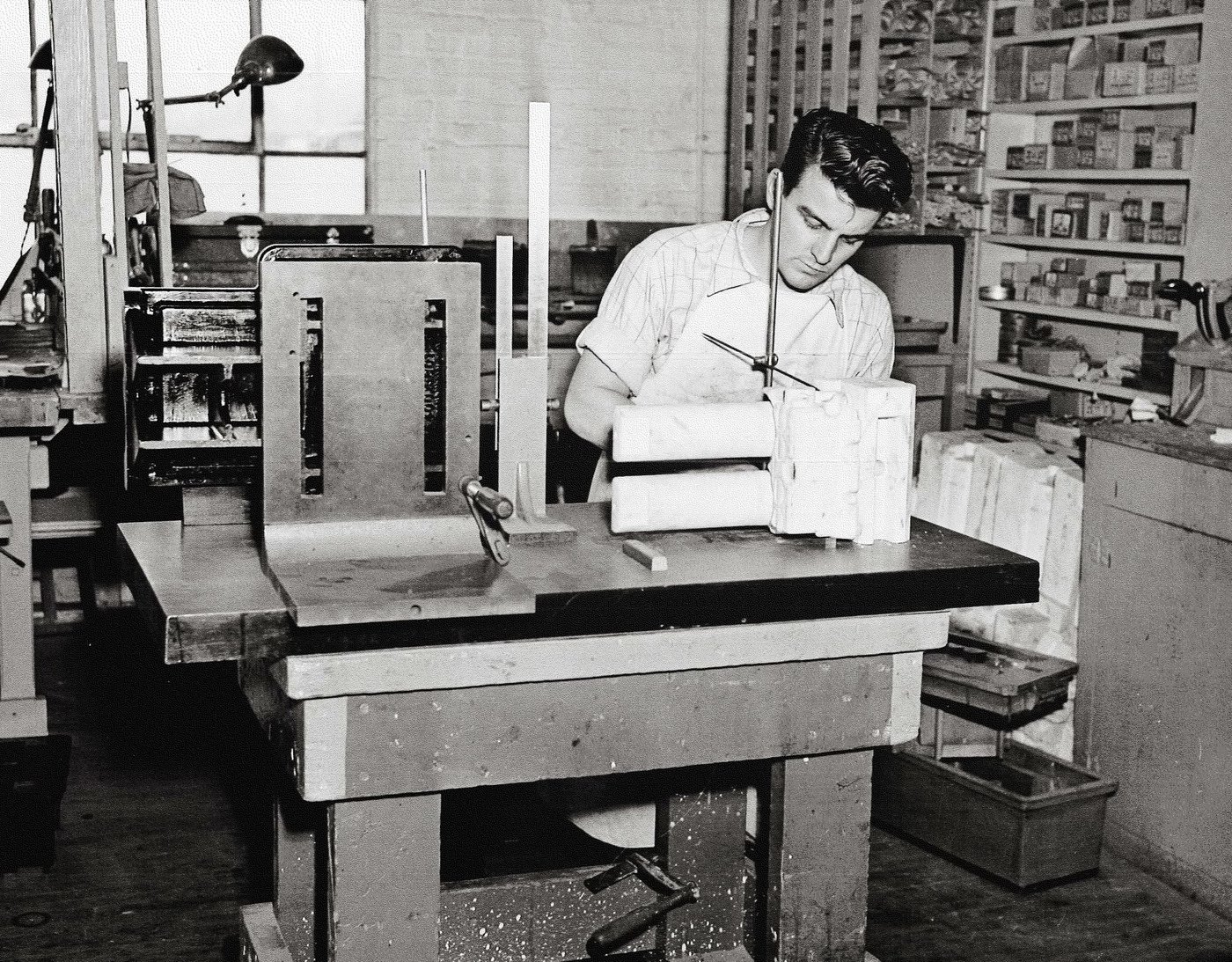
Muskegon: an American foundry town.
The story of Anderson Pattern can’t be told without the story of Muskegon. By the late 1800s, Muskegon’s vast white-pine lumber industry had given way to factories. By the early 1900s, those factories had given way to foundries — pouring iron and aluminum castings for the burgeoning American auto industry, agricultural equipment manufacturers, and military suppliers across the Midwest.
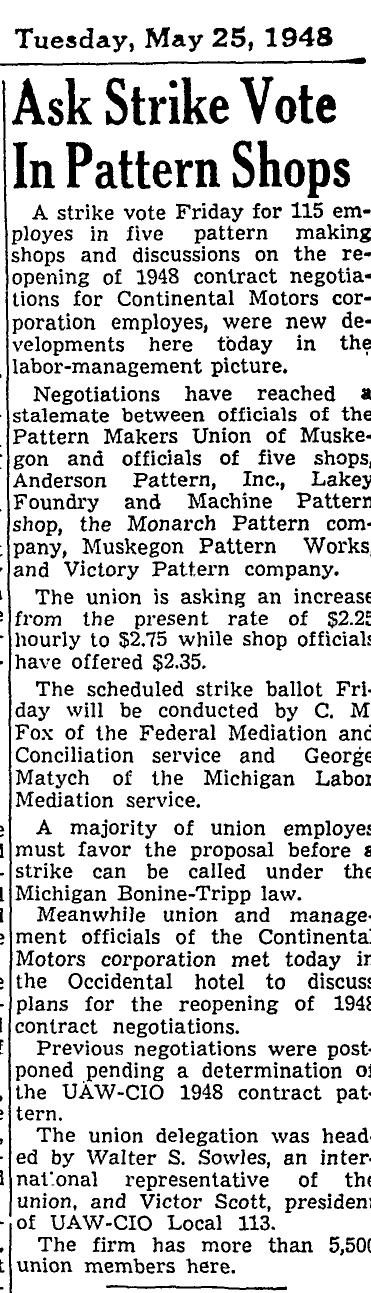
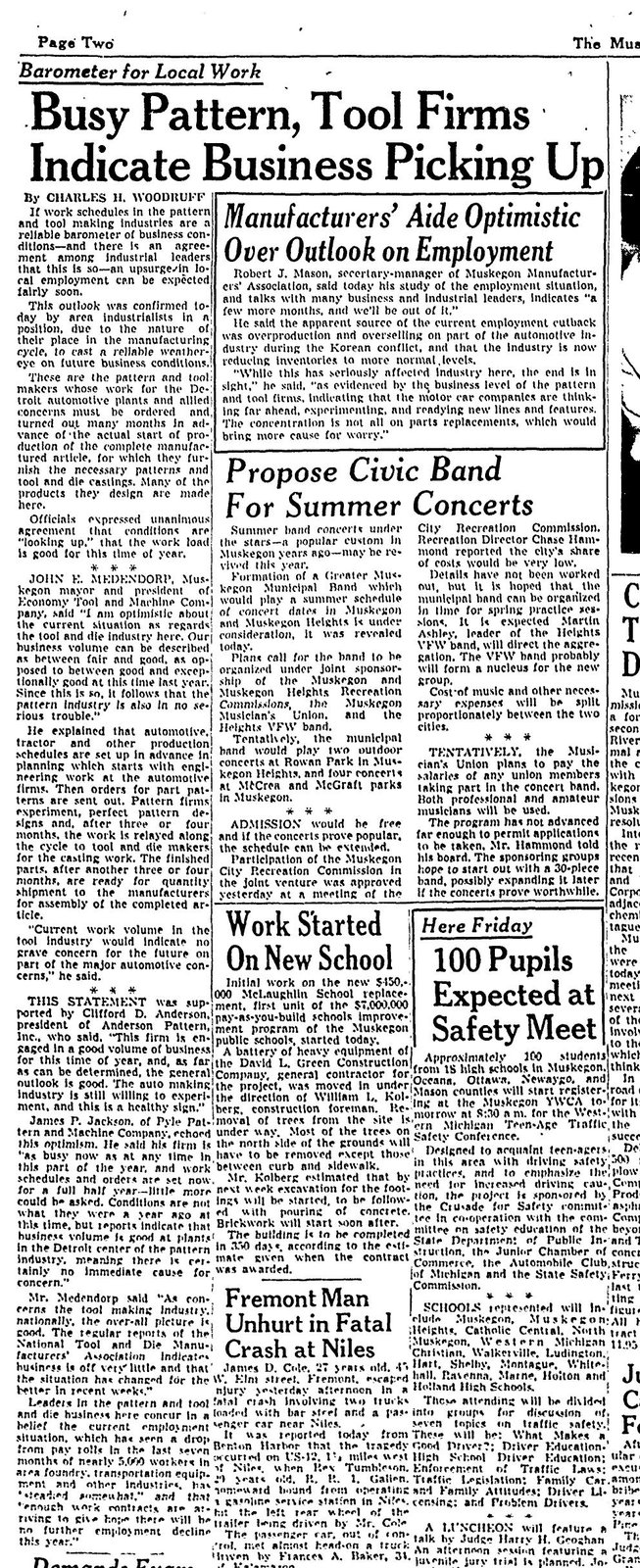
Where there are foundries, there must be pattern shops. By the 1930s, Muskegon was home to at least five major pattern-making houses, all unionized under the Pattern Makers Union, all supplying the surrounding foundries. The trade was a respected one — pattern shops were described in the local press as “a barometer for local work”, because patterns were ordered months before the castings they produced. When the pattern shops were busy, the local economy was about to be busy too.
In 1937, into this thriving industry, came Clifford D. Anderson.
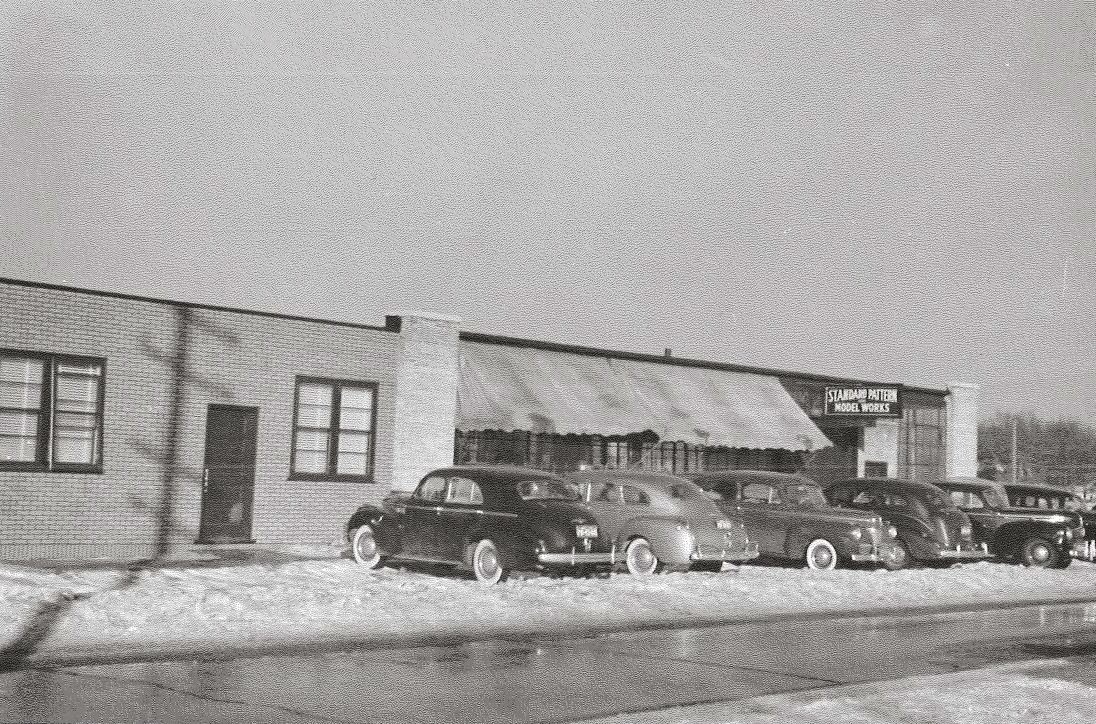
Clifford D. Anderson built it.
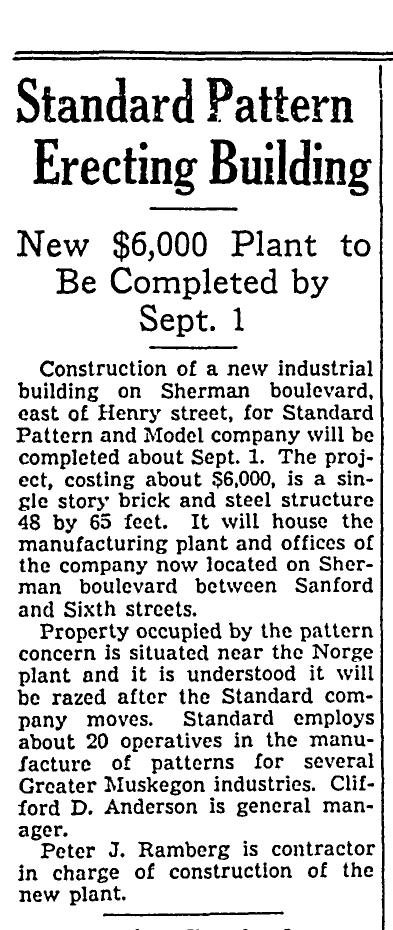
In August 1937, the Muskegon Chronicle reported that a new $6,000 single-story brick-and-steel building was being completed on Sherman Boulevard, east of Henry Street. The 48-by-65-foot plant would house Standard Pattern and Model Company, a pattern-making firm that already employed about 20 craftsmen at its old location nearby. The general manager was Clifford D. Anderson. The new plant was scheduled to open September 1, 1937.
Within a decade, the company would be renamed in his honor — Anderson Pattern, Inc. — and would settle into its current home at 500 W. Sherman Boulevard, where it has remained for more than 70 years.
Anderson’s words from 1954 could have been spoken today. Anderson Global still serves the auto industry. We still measure ourselves by experimentation, by precision, by the willingness to take on the casting problems no one else will. And we still produce patterns — the way we always have — with skilled hands and patient eyes.
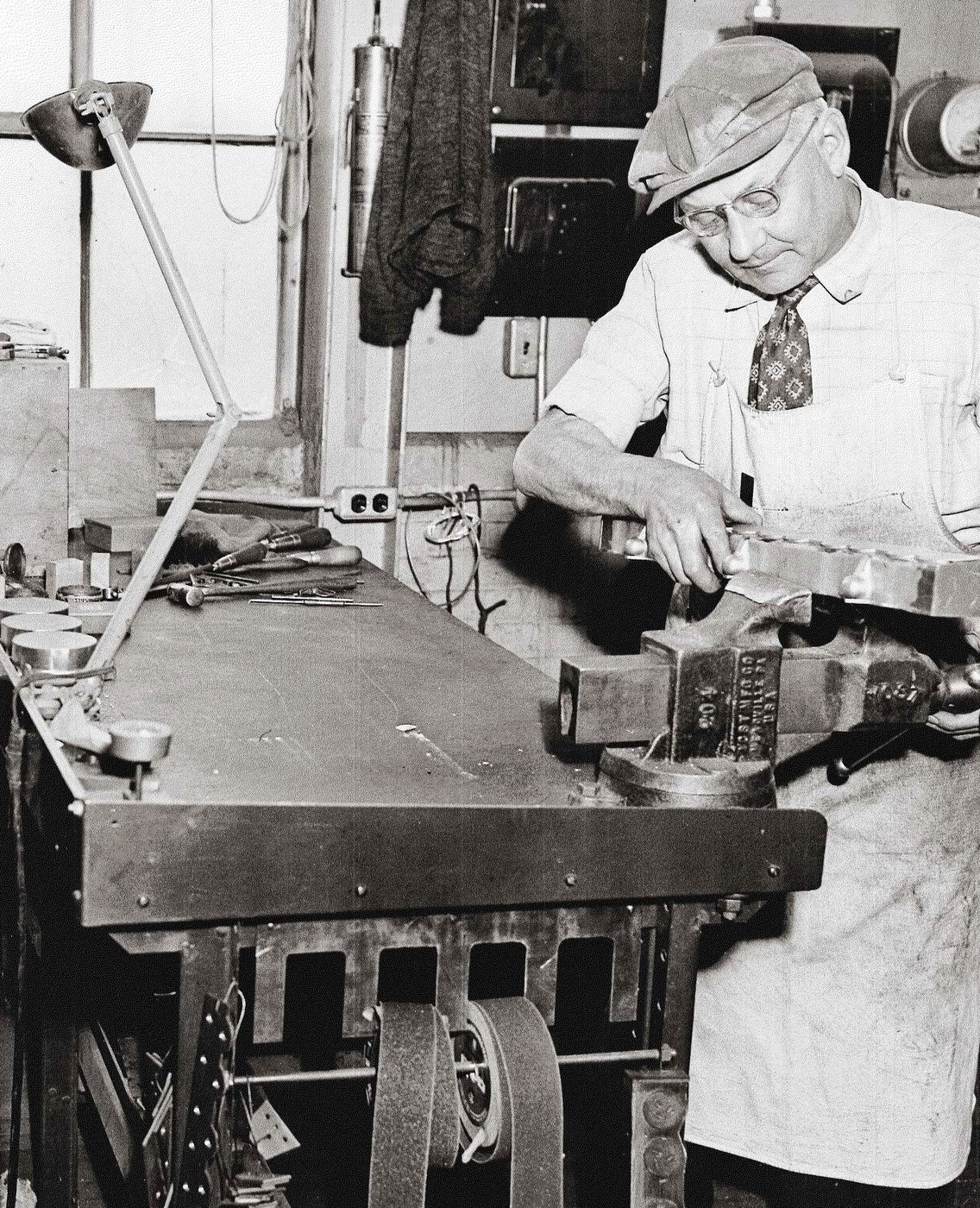
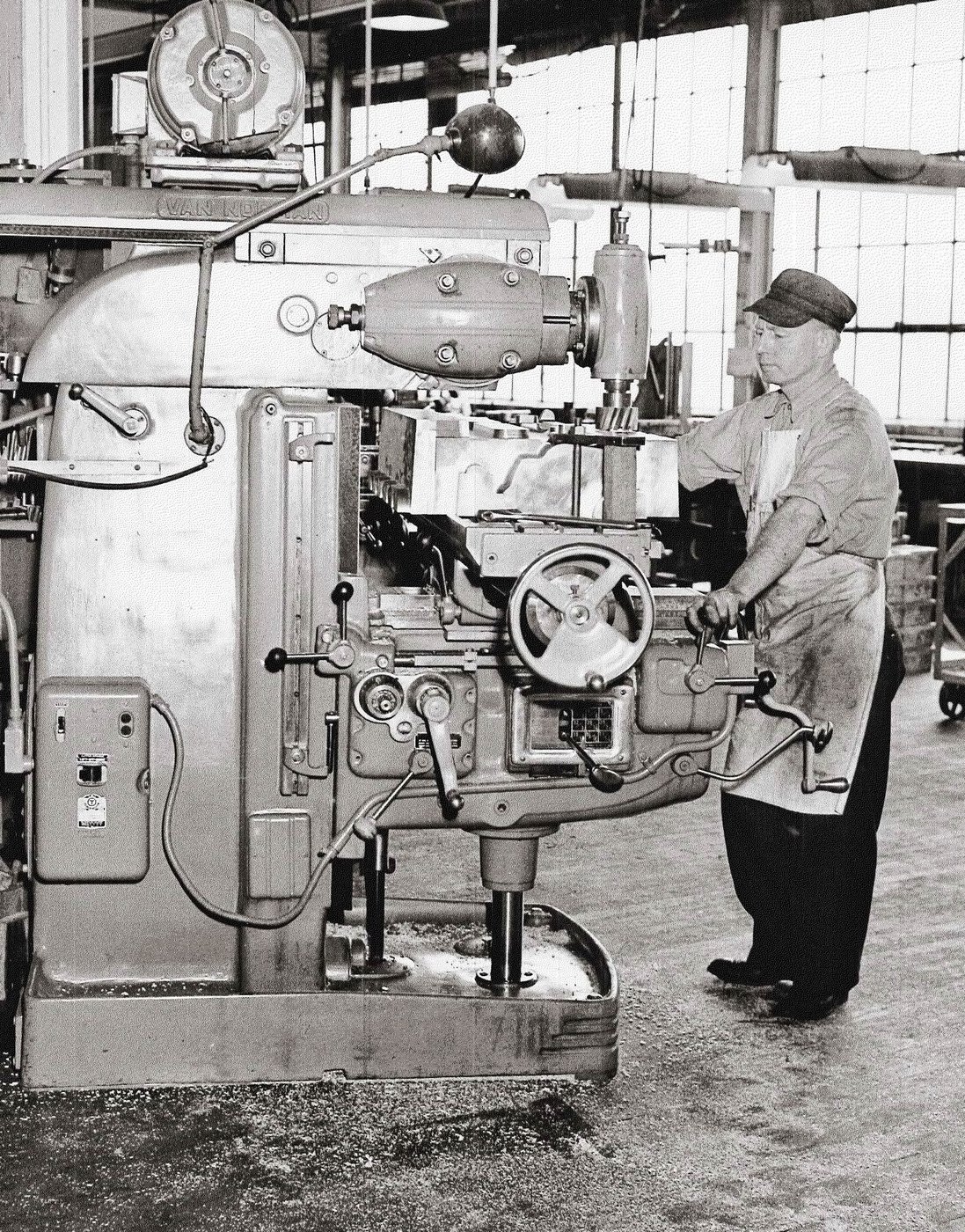
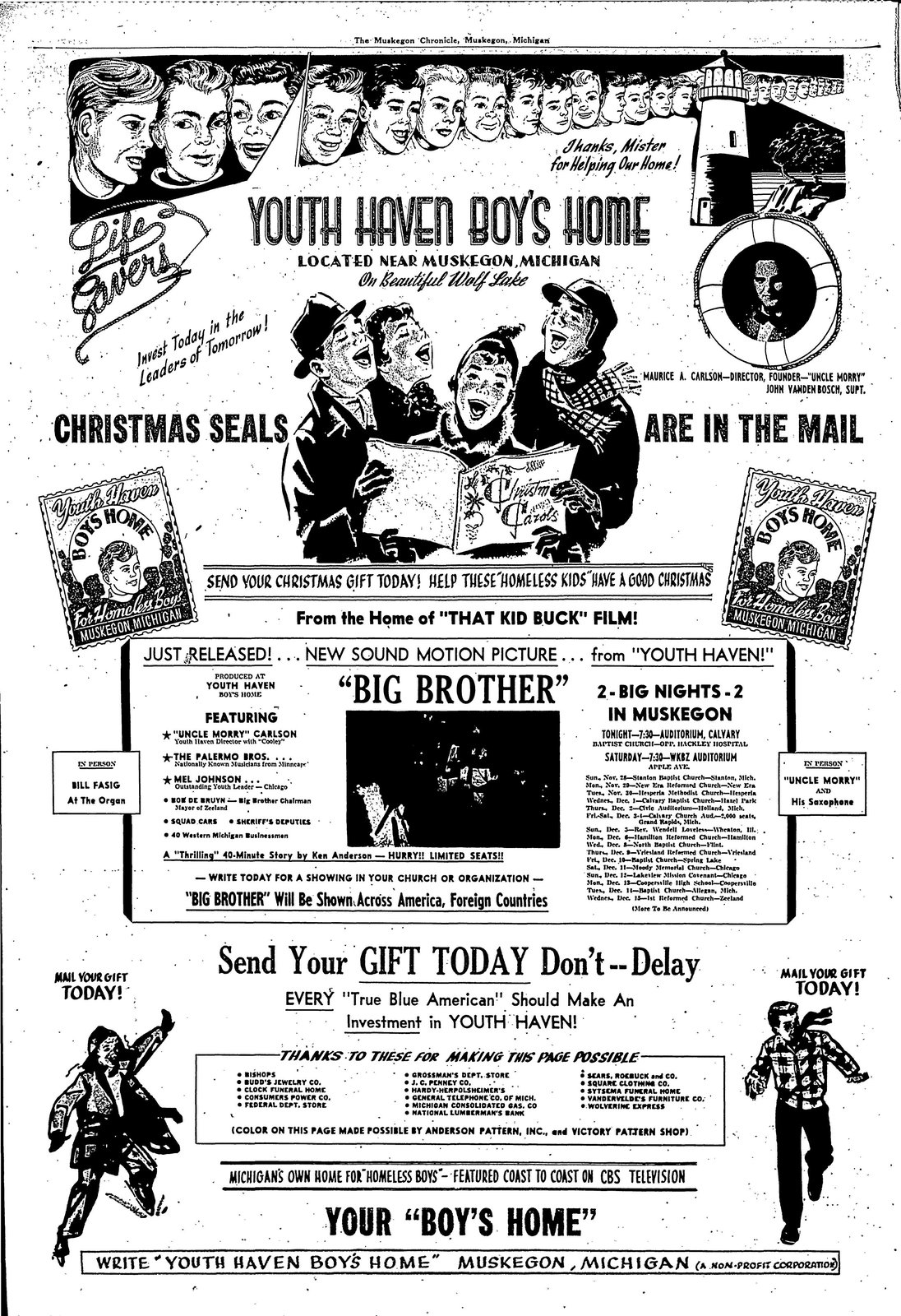
Anderson Pattern in the Muskegon Chronicle.
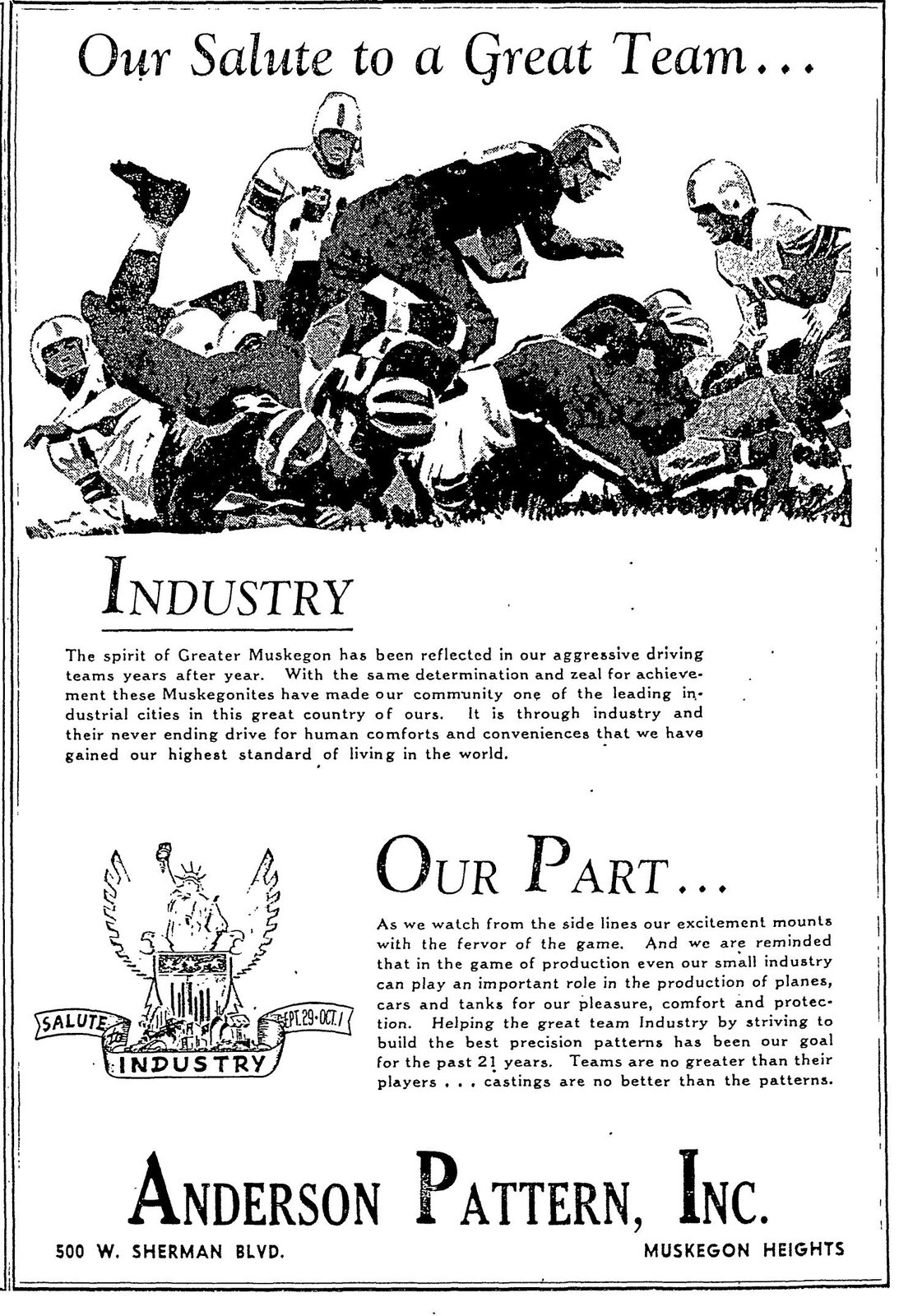
A handful of clippings from the Muskegon Chronicle archives, telling the story of Anderson Pattern across nearly two decades of American manufacturing — from the company’s founding through the Korean War era.
Why patternmaking matters — and why it almost disappeared.
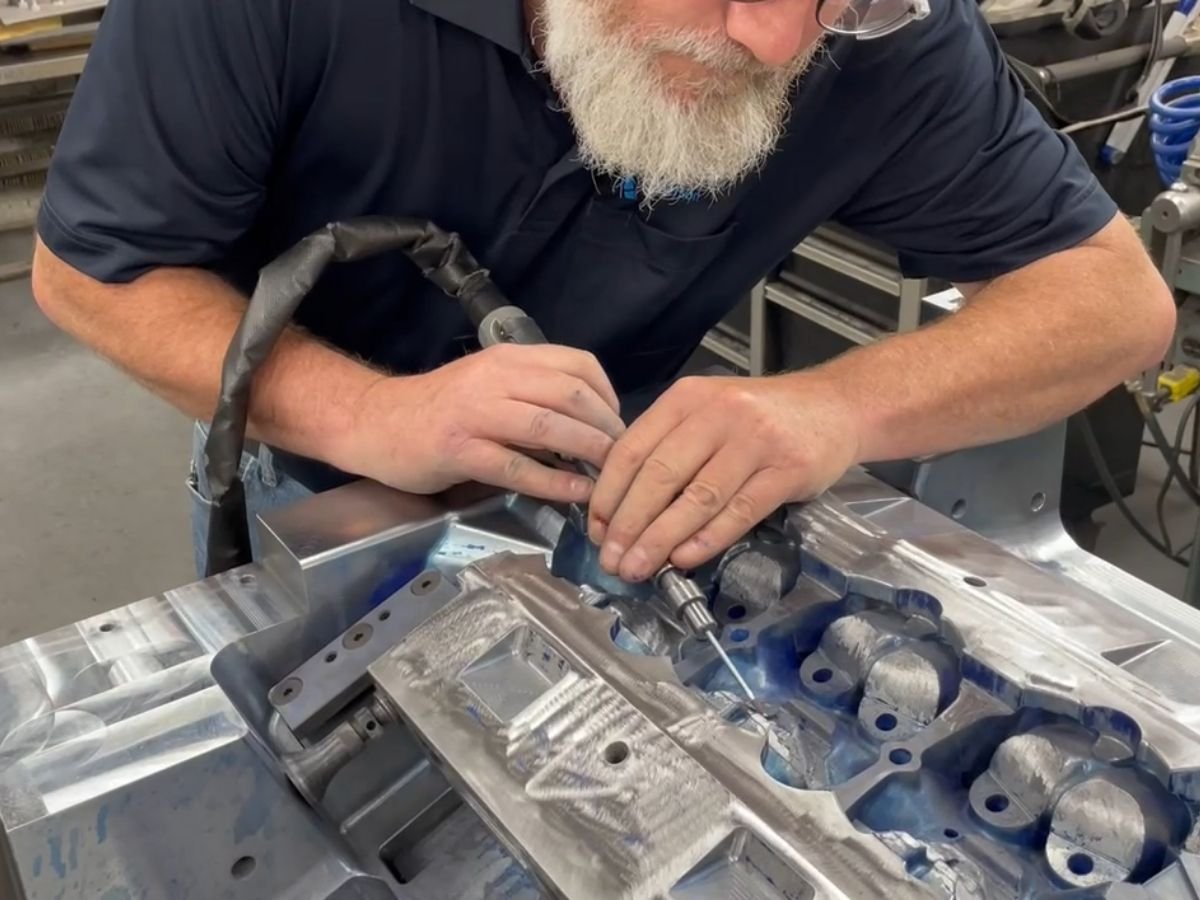
Across the second half of the 20th century, America’s foundries shrank. Offshoring, automation, and a generation of skilled tradesmen retiring without replacement thinned the patternmaking trade dramatically. Pattern shops that had operated for a century closed. Apprenticeships ended. The Pattern Makers Union, once a fixture of every industrial town, dwindled.
An industry expert called patternmaking “an endangered art.” They weren’t wrong. There are fewer working journeyman patternmakers in the United States today than there were in Muskegon alone in 1948.
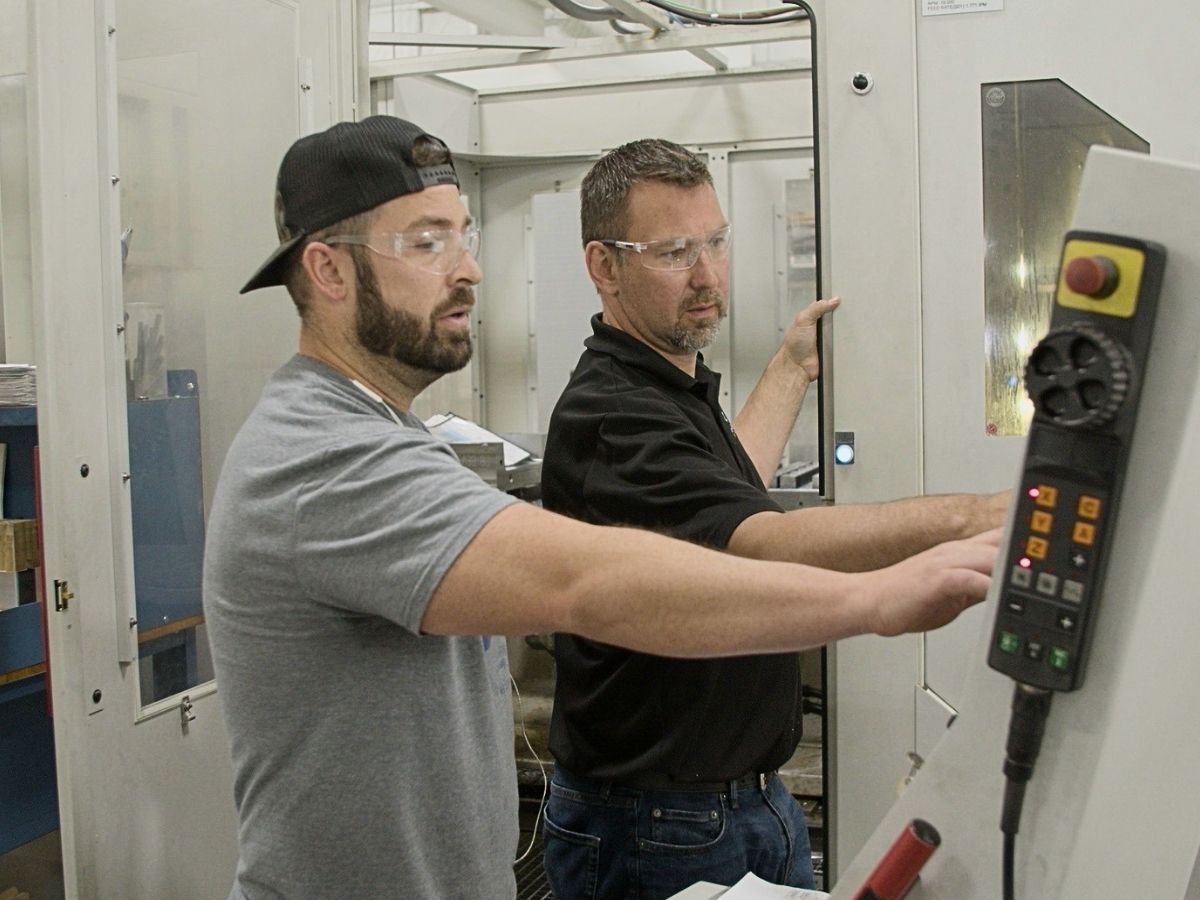
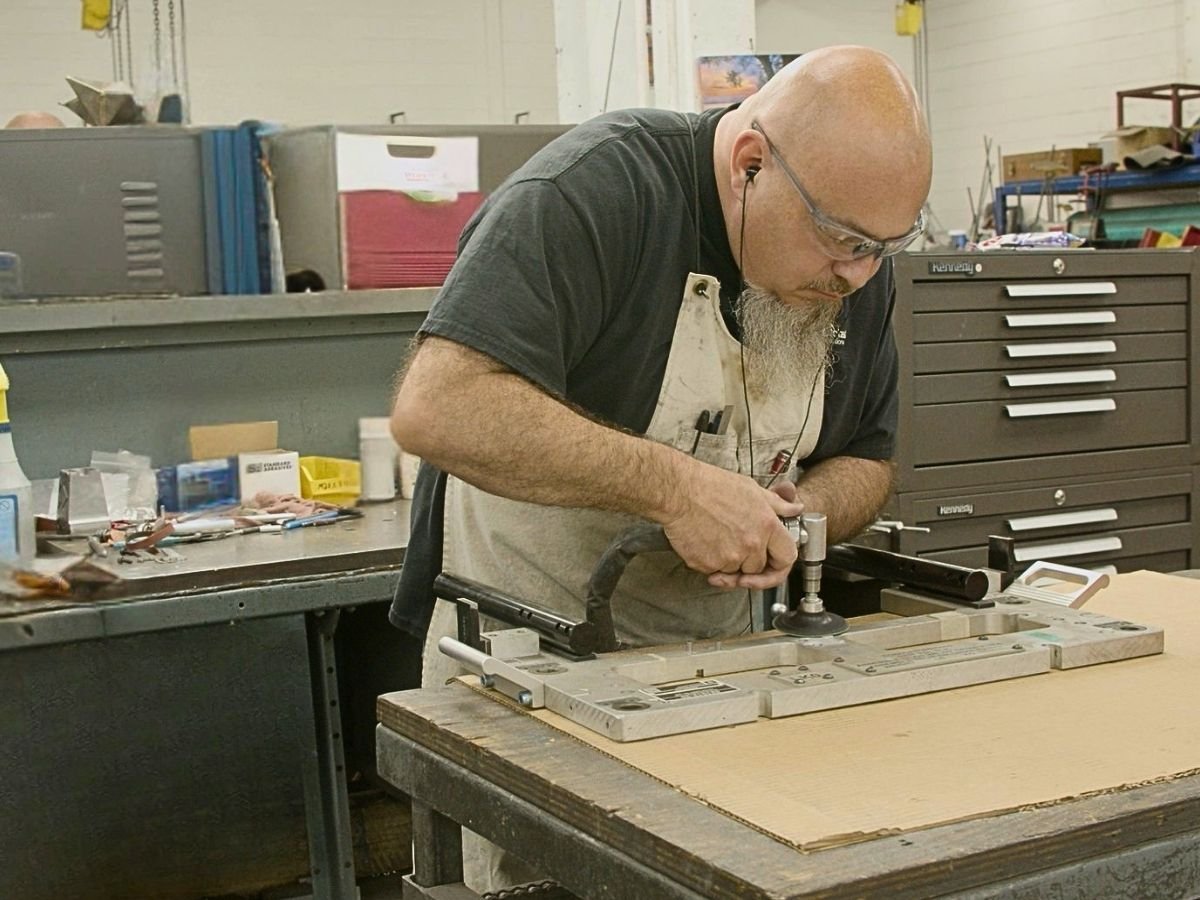
But the trade is not gone. At Anderson Global, our journeyman patternmakers carry more than a thousand years of collective experience under their toolbelts. We still run a DOL-registered apprenticeship program. We still teach the next generation the same way Clifford D. Anderson’s craftsmen taught theirs — one piece at a time, one weld at a time, one cut at a time. The tools have changed. The standard hasn’t.
April 1, 2025: joining the WAF family.
On April 1, 2025, Anderson Global was acquired by Wisconsin Aluminum Foundry (WAF), a family-owned company founded in 1909 and headquartered in Manitowoc, Wisconsin. WAF is a leader in aluminum and copper-based alloy castings, and the two companies had been doing business with each other for years before the acquisition — WAF buying tooling from Anderson Global, and an AG sister company supplying castings the other direction.
For John and Betsy McIntyre, who had been looking for the right strategic partner for nearly a decade, WAF was the natural choice. “It was important to us to find a partner that understands our industry and shares our values,” they said in the announcement. “Given our long-standing partnership with WAF, they were the natural choice.”
Anderson Global continues to operate as a standalone subsidiary within the WAF family. All 80 team members remain in place. The shop at 500 W. Sherman Boulevard keeps running the way it has since 1937 — only now with the resources, stability, and customer reach of one of America’s most respected foundry groups behind it.
For us, that means one thing above all: the patternmaking trade in Muskegon Heights has a long future ahead of it.
Be part of what comes next.
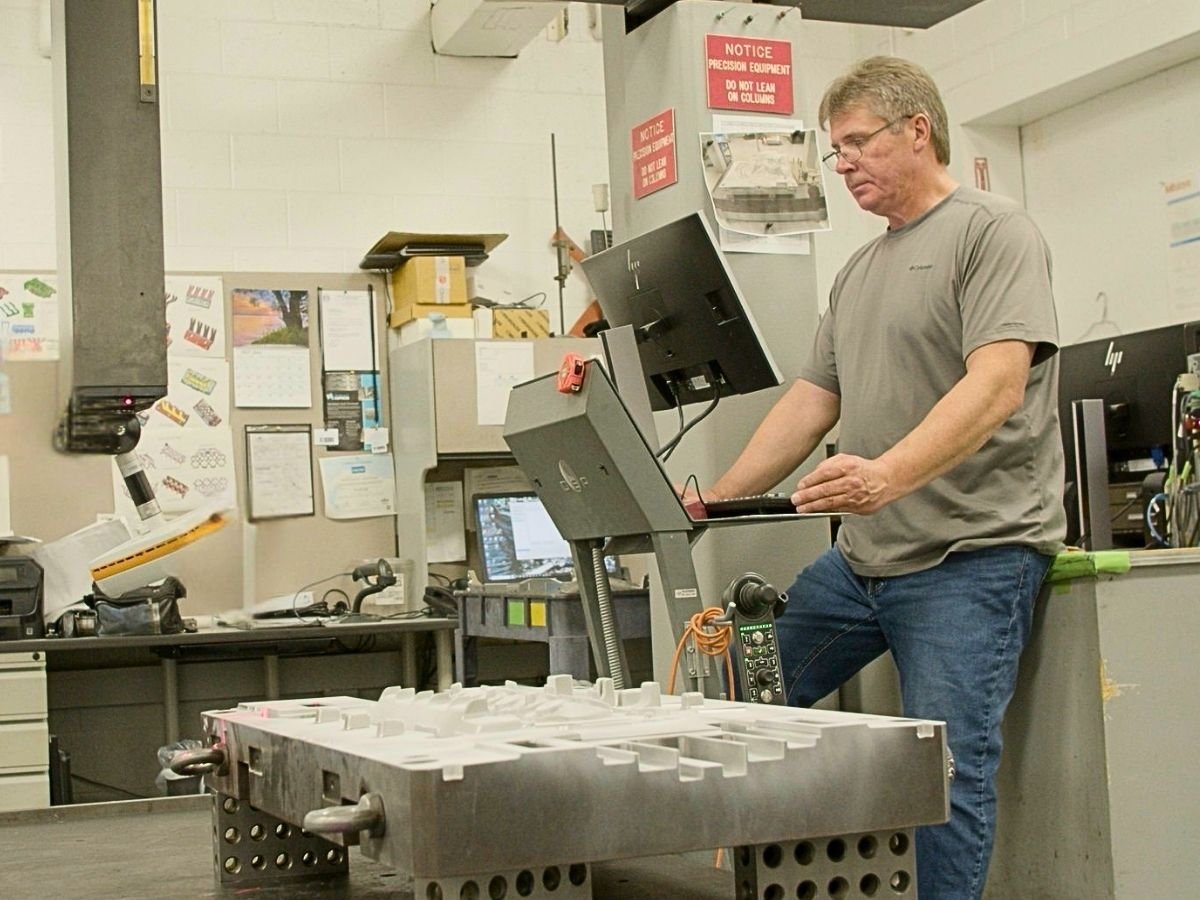
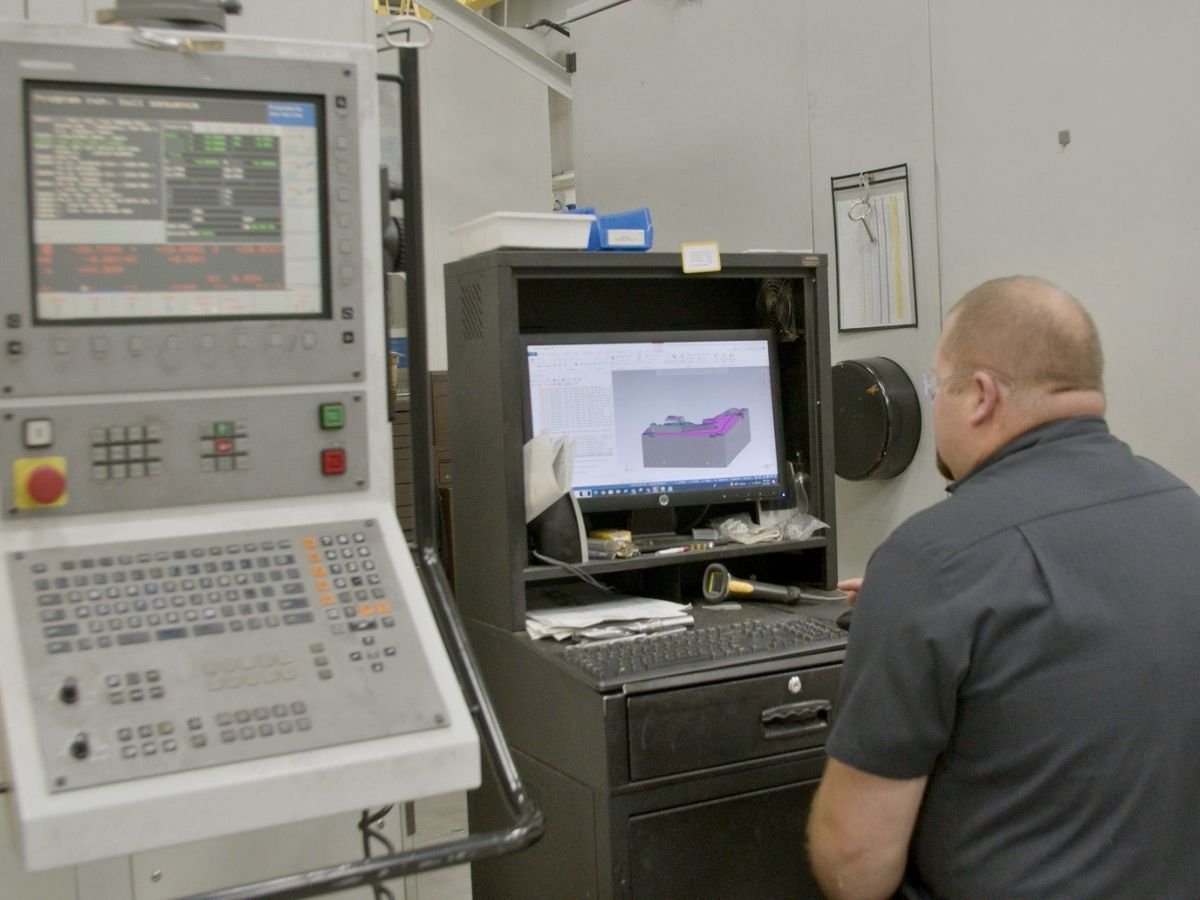
Anderson Global is hiring journeyman patternmakers, apprentices, CAD engineers, CNC machinists, and shop support professionals. If you’ve ever wanted to build something that lasts, this is the trade and this is the time.
SEE OPEN POSITIONS →